Guide
How to use this silver price per gram
A per-gram silver value is often more useful than the headline spot price because most jewelry, flatware, and small scrap items are weighed in grams. This page turns the troy-ounce market quote into gram values for 999 fine silver, 925 sterling, 900 coin silver, 835 silver, 800 silver, and other common purities.
Use the calculator for a direct item estimate, then read the guide to understand why the gram price changes by purity and why buyer offers can differ from the displayed melt value.
How silver price per gram is calculated
+
The pure gram value is the silver spot price per troy ounce divided by 31.1035. That gives the 999 fine silver gram benchmark. To calculate other purities, multiply the pure gram price by the purity. Sterling silver uses 0.925, coin silver often uses 0.900, and 800 silver uses 0.800.
This is why a gram quote should always identify purity. A gram of sterling silver is not worth the same as a gram of 999 bullion. The calculator shows the value for the selected purity and the result panel provides a quick check for price per gram and price per troy ounce.
Why gram price helps sellers
+
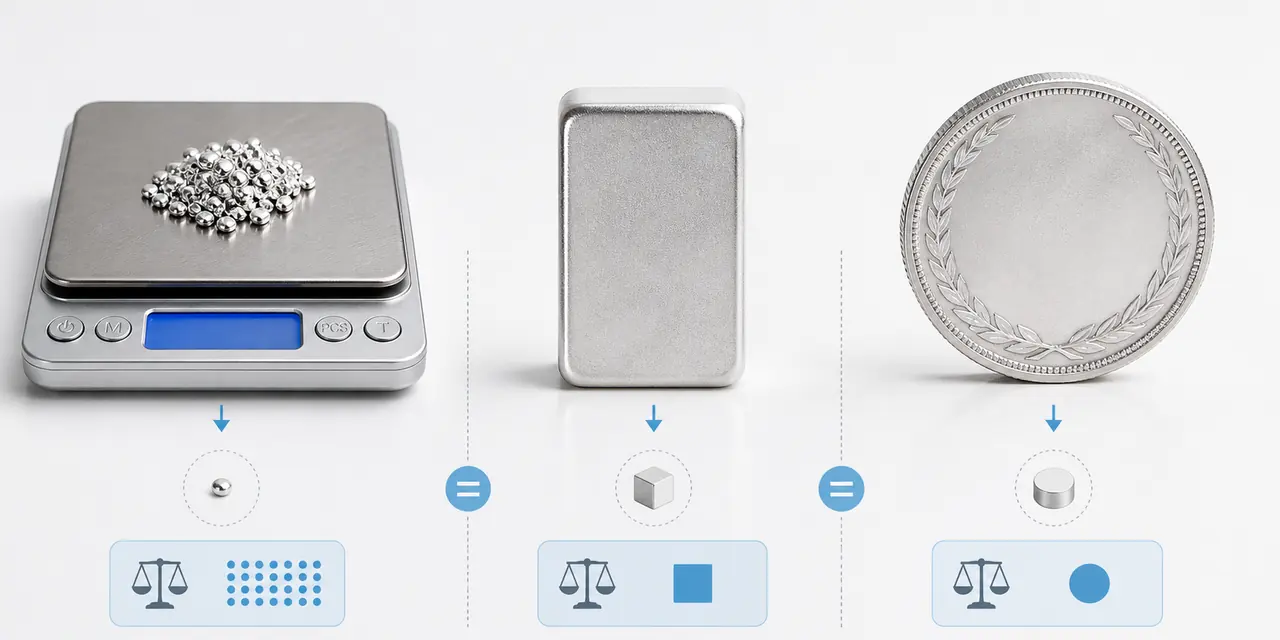
Many sellers weigh items on small digital scales that display grams. A gram reference lets you estimate value without converting every item into troy ounces. If your sterling bracelet weighs 30 grams, you can multiply 30 by the current 925 gram value to estimate melt value. The calculator does that automatically, but understanding the gram basis helps you check buyer quotes.
Some buyers quote by pennyweight or troy ounce instead of gram. That is fine as long as the conversion is correct. Asking for the gram equivalent makes comparison easier, especially when you are comparing several local and online offers.
Gram price by purity
+
Fine silver is the highest common gram reference because it is close to pure. Sterling silver is the most common jewelry and flatware reference in the U.S. and U.K. 900 coin silver is common for many older U.S. silver coins. European items may be 835 or 800. Some coins are 40% silver and should be valued at a much lower gram rate.
When purity is uncertain, do not choose the highest value just because the item looks bright. Use the mark, documentation, or a test. If you are modeling an uncertain item, custom purity lets you create a cautious estimate without pretending the item is verified.
Gram price is not retail price
+
A per-gram melt reference is not the same as retail price. Retail jewelry prices can be much higher because of labor, design, brand, stones, taxes, and store markup. Scrap buyer offers can be lower because of testing, refining, and margin. Bullion products may trade above melt because of fabrication and dealer premium.
Use the gram price to identify the metal floor. Then decide which market applies: scrap, bullion, collectible, antique, or retail resale. The right market can matter more than a small change in spot price.
FAQ
Silver Price per Gram FAQ
How do I find silver price per gram?
+
Divide the silver spot price per troy ounce by 31.1035. Then multiply by purity if the item is not pure silver.
What is 925 silver per gram worth?
+
925 silver per gram is worth 92.5% of the pure silver gram price before buyer deductions or premiums.
Why do silver gram prices differ by site?
+
Differences usually come from spot timestamp, currency, rounding, and whether the site shows pure silver or selected-purity silver.
Is gram price better than ounce price?
+
For small jewelry and scrap lots, gram price is usually easier. For bullion, troy ounce pricing is often more natural.
Can I calculate 800 silver per gram?
+
Yes. Choose 800 purity and one gram, or enter the actual item weight with 800 selected.
Does gram price include buyer payout?
+
No. Gram price is a melt reference unless you apply buyer payout mode to a full item estimate.
Should I use standard ounce or troy ounce?
+
Use the unit your source uses. Spot silver uses troy ounces, while many consumer scales use standard ounces or grams.
Can gram melt value go below my buyer quote?
+
A buyer quote can be above gram melt value if the item has collectible, resale, or premium value. The calculator only estimates metal content.