Guide
How to use this scrap silver calculator
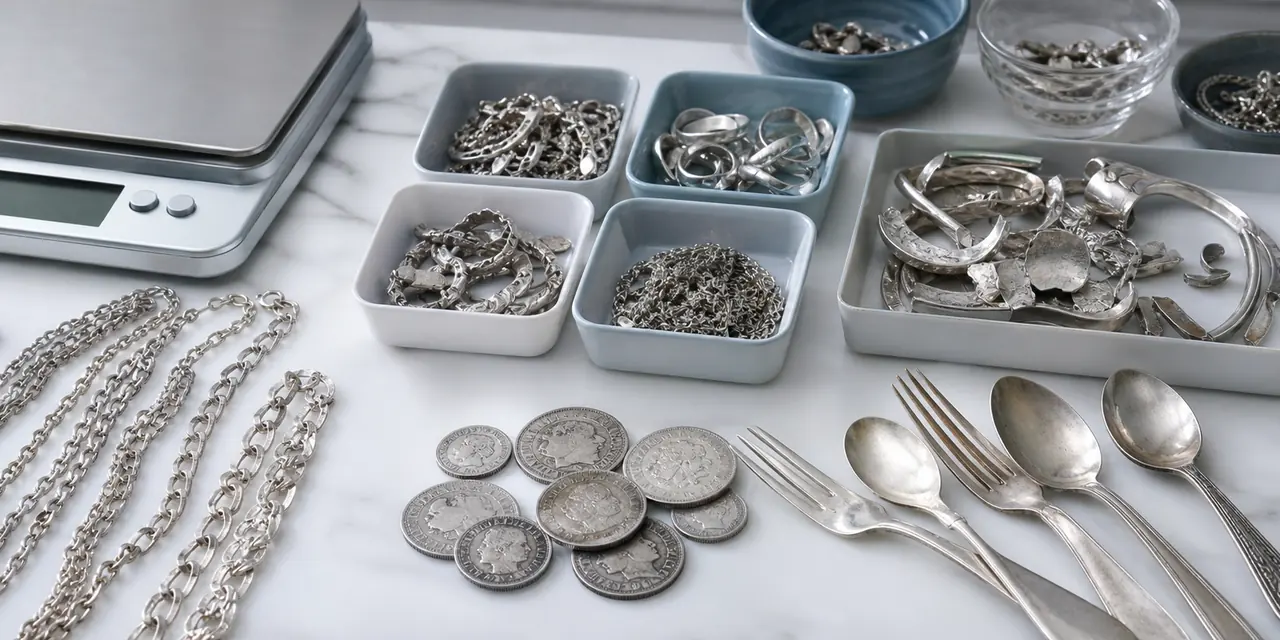
The scrap silver calculator is built for mixed lots: broken chains, old sterling jewelry, flatware, coin silver, small bullion pieces, and silver items you plan to sell for metal value. Instead of forcing every item into one average purity, the worksheet lets you add rows. Each row can have its own weight, unit, and purity, which keeps sterling, 900 coin silver, 800 silver, and fine silver separate.
Scrap silver value is not always the same as melt value. Melt value is the full spot-based metal baseline. A buyer offer is normally a percentage of melt value because the buyer has to test, sort, refine, ship, and manage market risk. The payout selector helps you model that reality before you accept a number.
How to prepare a scrap silver lot
+
Start by separating items into categories. Put 925 sterling jewelry in one group, 900 coin silver in another, 800 or 835 European silver in another, and suspected plated items aside. Weigh each group separately if individual item entry is too slow. Sorting is more important than perfect naming because the value comes from weight and purity, not the label you type into the row.
Remove obvious non-silver weight when possible. Stainless knife blades, filled handles, stones, leather, wood, glass, and cement can distort the estimate. Some weighted sterling items contain only a silver shell over filler. If you cannot separate the silver portion, treat the result as an upper bound and expect a buyer to discount or test the piece more aggressively.
Why buyer payouts vary
+
Two buyers can quote different prices for the same scrap silver because their costs and risk are different. A pawn shop or local secondhand buyer may offer quick cash but apply a wider margin. A refiner or specialist online buyer may pay more for a clean, sorted lot, especially when the weight is meaningful and the purity is easy to verify. Small lots can receive weaker payouts because processing cost is high relative to silver value.
The payout selector is not a promise. It is a way to translate a melt value into a possible offer range. If your calculated melt value is $200 and a buyer offers $120, that is 60% of melt. If another buyer offers $170, that is 85% of melt. Comparing offers as percentages makes the conversation clearer than comparing only cash numbers.
Sterling flatware and hollowware caution
+
Sterling flatware is often a good scrap silver candidate, but not every piece is simple. Forks and spoons are usually easier to estimate than knives because many sterling-handled knives include stainless blades and filler. Hollowware can also include weighted bases or reinforced parts. A gross-weight estimate may be much higher than the recoverable silver estimate if the item is not solid throughout.
For large flatware sets, calculate the metal baseline first, then check whether the set has resale value above melt. Complete patterns, desirable makers, and antique condition can matter. If the set is damaged, incomplete, monogrammed, or unpopular, melt value may be the practical floor. The calculator gives you the floor before you decide whether to seek a retail buyer.
How to use the worksheet before selling
+
Enter each item or purity group, choose the payout range, and write down the total melt value and estimated offer. When contacting buyers, ask which spot price they use, whether they pay by gram, pennyweight, or troy ounce, and whether their quote is before or after fees. If a buyer refuses to explain the unit and payout percentage, compare with another buyer before accepting.
Keep photos and notes for your lot. A simple table with weight, purity, and estimated melt value helps prevent confusion when you receive quotes by phone, email, or counter inspection. It also helps you notice if a buyer weighs the lot differently or classifies a piece as plated or filled.
FAQ
Scrap Silver Calculator FAQ
How do I calculate scrap silver value?
+
Sort items by purity, weigh each item or group, convert weight to grams, multiply by purity, and multiply by the silver price per gram. The worksheet performs those steps for each row.
What is a fair scrap silver payout?
+
A fair payout depends on lot size, buyer type, testing cost, and purity confidence. Clean sorted lots may receive stronger percentages of melt than small mixed or uncertain lots.
Should I include stones or handles in the weight?
+
No, not when you can avoid it. Non-silver parts overstate melt value. If they cannot be removed, expect the buyer to deduct or quote more conservatively.
Can I mix sterling and coin silver?
+
Yes, but enter them as separate rows or groups. Sterling is usually 92.5% silver, while many coin silver lots use 90% or 40% depending on the coin.
Is silver plate scrap valuable?
+
Silver plate is not valued like solid silver because the silver layer is thin. Some buyers may buy it by the lot, but the calculator should not treat it as sterling.
Why does the calculator show buyer payout?
+
Scrap sellers usually receive less than melt value. Buyer payout mode helps model the gap between theoretical metal value and a likely cash offer.
Does the calculator handle pennyweight?
+
Yes. Select pennyweight if your buyer quotes dwt. The worksheet converts pennyweight to grams before applying purity.
Can I use this for dental silver or industrial scrap?
+
Only if you know the silver content. Industrial and dental materials can have alloys that require assay or refiner evaluation.